Benfleet, Essex
Commercial EICR Benfleet
A commercial EICR (Electrical Installation Condition Report) is a formal inspection of the fixed electrical installation in a shop, office, unit, restaurant or other business premises.
- Send a short enquiry
- Covering Essex
- EICR and related services
Commercial EICR for Benfleet businesses
EICR Benfleet covers Benfleet and nearby parts of Essex. This page explains what the inspection involves and when it is time to book one.
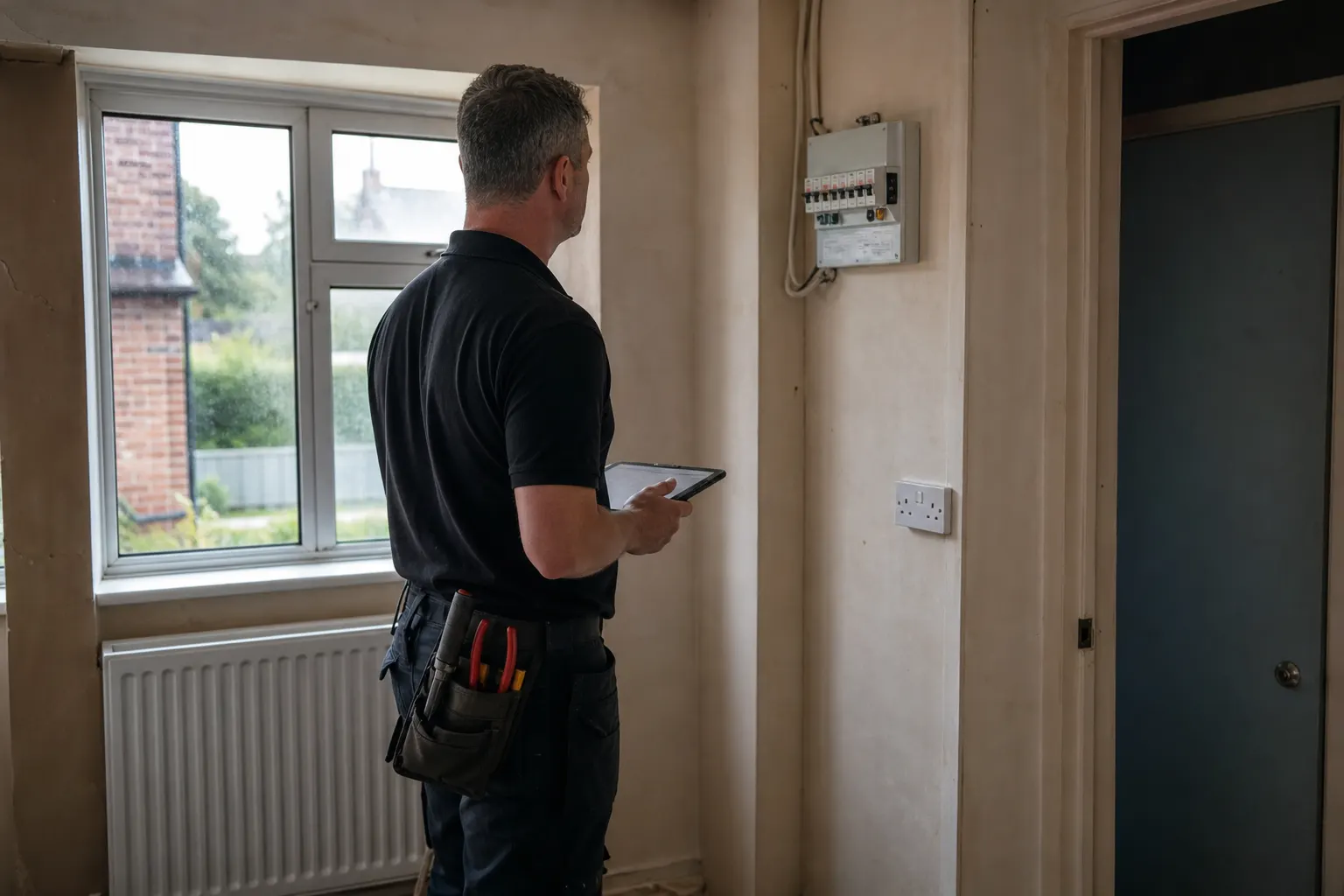
What a commercial EICR involves
An EICR looks at the fixed wiring and the equipment that protects it. That usually means the consumer unit or distribution board, circuit breakers and RCDs, sockets, switches, lighting circuits, earthing and bonding, and the condition of cables where they can be reached.
The inspector carries out visual checks and a series of tests on each circuit, then records the results against the current edition of the wiring regulations, BS 7671. Parts of the installation may need to be switched off while this happens, so it helps to think about which circuits your business can do without and for how long.
An EICR is not the same as portable appliance testing (PAT). PAT covers plug-in equipment such as kettles and monitors. An EICR covers the permanent installation behind the walls, in the ceilings and in the distribution boards.
When to call for a commercial EICR
Common reasons to book include:
- The last report is approaching five years old. Five years is the usual maximum interval suggested for most commercial premises, though some settings need shorter gaps. - You are taking on a new lease or buying a commercial property and do not know the condition of the wiring. - Your insurer, landlord or licensing body has asked for a current report. - You have had a change of use, a refit or an extension. - You have noticed warning signs: tripping breakers, flickering lights, warm sockets, scorch marks or a burning smell.
If you are an employer or a person in control of premises, the Electricity at Work Regulations 1989 expect electrical systems to be maintained so they do not cause danger. Regular inspection is one practical way to show that you are keeping on top of it.
Understanding the results
The report gives an overall outcome of satisfactory or unsatisfactory. Any problems are listed with observation codes.
C1 means danger is present and immediate action is needed. C2 means potentially dangerous, and an unsatisfactory result will normally follow. C3 means improvement is recommended but it is not considered dangerous. FI means further investigation is required.
If the result is unsatisfactory, the next step is to have the C1 and C2 items put right and, where needed, the installation retested. Ask for the findings to be explained in plain terms so you can prioritise the work and budget for it.
Getting ready for the inspection
A little preparation keeps things smooth. Let staff know that power may be interrupted, and save work on computers and tills. Make sure the inspector can reach distribution boards, meter cupboards and any locked plant rooms. Gather the previous EICR and any recent electrical work records if you have them.
If you run a business that cannot lose power during trading hours, say so when you enquire and ask how the visit can be planned around that.
Questions about this
How often does a commercial property need an EICR?
Five years is the usual maximum suggested for most commercial premises. Some environments need more frequent inspection, and a change of tenant, a refit or an insurer's request can bring the date forward. The previous report should state the recommended date for the next one.
Is an EICR a legal requirement for a business?
The Electricity at Work Regulations 1989 require electrical systems to be kept safe, and a periodic EICR is the usual way to evidence that. Your lease, insurer or licensing conditions may also ask for one, so check those documents.
How long does a commercial EICR take?
It depends on the size of the premises and the number of circuits. A small shop or office is quicker than a large unit with several distribution boards. Ask when you enquire and describe the premises as fully as you can.
What happens if my commercial EICR is unsatisfactory?
The report will list the faults with observation codes. C1 and C2 items need to be put right, then the work can be retested. C3 items are recommendations you can plan for.
Do you cover areas outside Benfleet?
Yes. EICR Benfleet also serves Hadleigh, Thundersley, Canvey Island and Rayleigh.
What you get
Covers Benfleet and nearby
Commercial EICR work is available across Benfleet, Hadleigh, Thundersley, Canvey Island and Rayleigh.
Related electrical services
If the report points to an ageing consumer unit, Consumer Unit Upgrades are among the other services offered.
Plain advice before you book
This page sets out what a commercial EICR covers and when to arrange one, so you know what to expect.