Guide
Do commercial properties need electrical safety certificates?
Commercial premises have a legal duty to keep electrics safe, and an EICR is the usual way to prove it. Here is how it works for owners, landlords and tenants.
- Send a short enquiry
- Covering Essex
- EICR and related services
There is no single rule that says every commercial property must hold one named certificate, but the law does require the electrical installation to be kept safe, and an EICR (Electrical Installation Condition Report) is the standard way to show it. In practice, most employers, landlords and managing agents need a current EICR on file. The rules can change, so check GOV.UK for the current position.
What the law expects of commercial premises
Commercial premises are covered by health and safety law and by the Electricity at Work Regulations. Together these say that electrical systems must be constructed and maintained so they do not cause danger. The duty falls on employers, the self-employed and whoever controls the premises.
The regulations do not name an EICR or set a fixed deadline. But a periodic inspection and test is the accepted way to show that you have checked the installation and kept it in a safe condition. If there is a fire or an injury, an inspector, insurer or solicitor will usually ask for your most recent report.
What an EICR is and what it does
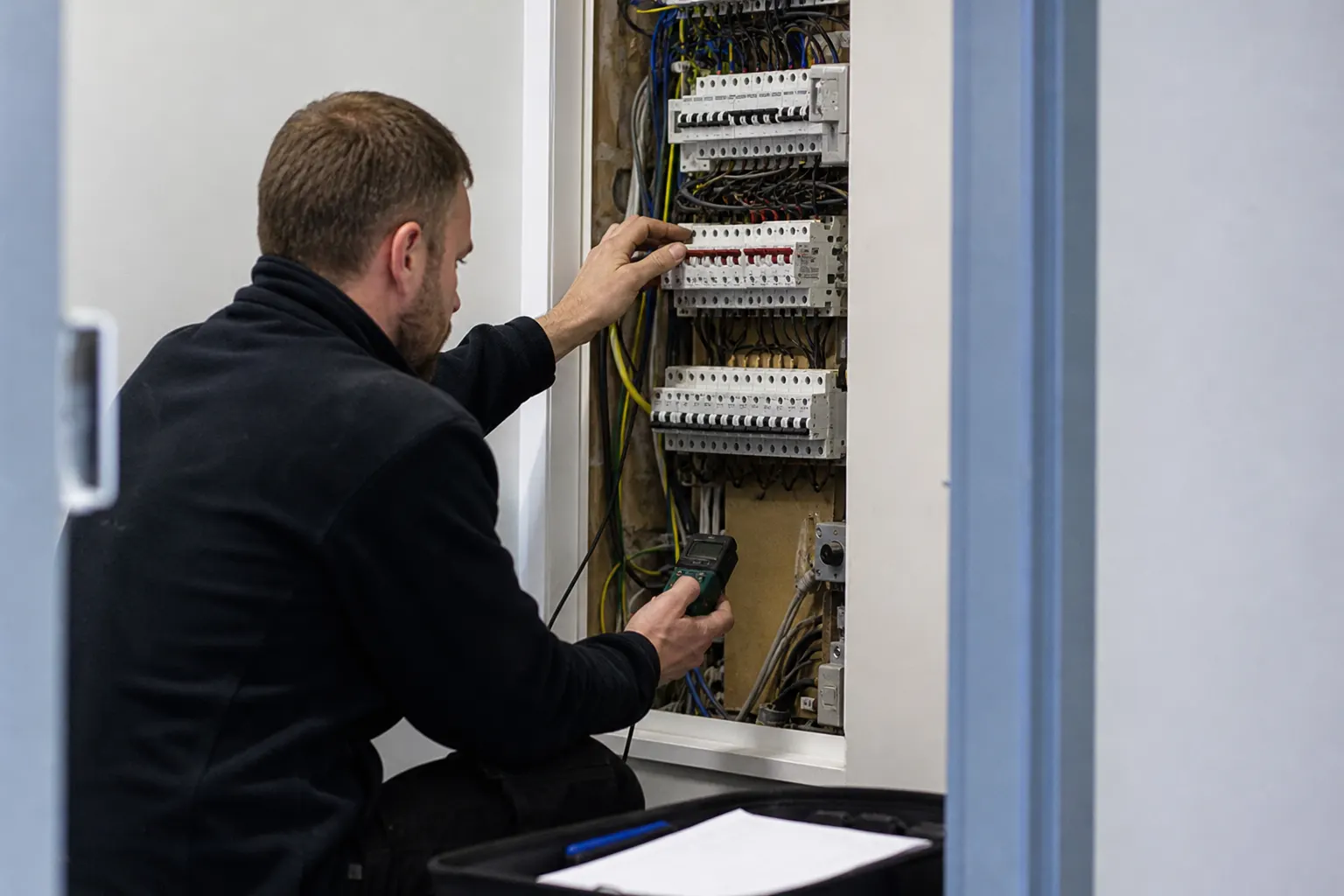
EICR stands for Electrical Installation Condition Report. A qualified person inspects and tests the fixed electrical installation: the consumer unit, wiring, sockets, lighting circuits, earthing and bonding. They then record the condition of each part.
The report grades any problems by urgency. A C1 means danger is present, a C2 means potentially dangerous, and a C3 means improvement is recommended. An FI means further investigation is needed. The overall result is satisfactory or unsatisfactory, and any C1, C2 or FI item makes it unsatisfactory until the remedial work is done.
How often a commercial EICR is needed
Because the regulations do not set a date, the interval comes from industry guidance and your own risk assessment. For many offices, shops and similar premises, an inspection about every five years is a common starting point. The inspector will state a recommended date for the next inspection on the report.
Some places need checks more often. Examples include sites with heavy use, damp, dust, vibration or temporary installations, such as workshops, kitchens, salons and storage units. It is also sensible to arrange an inspection when you take over a property, after major alterations, or when the previous report is missing. Your insurer or lease may also set its own requirement, so read both.
Landlords, tenants and who is responsible
The specific electrical safety rules for privately rented homes are separate from commercial lettings, so do not assume they apply to a shop or office. For commercial leases, responsibility depends on who controls the installation and what the lease says. Often the landlord is responsible for the fixed installation, while the tenant is responsible for what they add and how they use the space.
If you are a tenant, check your repairing obligations before you move in or renew. If you are a landlord, an up-to-date EICR makes lettings and renewals smoother, and it shows you have met your duty of care. A new report is not automatically needed for each new tenant, but it is worth having one if the last is out of date, if the use of the unit changes, or if the lease asks for it.
EICR, PAT testing and remedial work
An EICR covers the fixed installation. PAT testing covers portable appliances, such as kettles, monitors and power tools. They are different checks, and having one does not replace the other. Many businesses schedule both so they have a complete record.
If your report is unsatisfactory, the remedial work should be done promptly, starting with anything marked C1 or C2. Once the repairs are complete, ask for written confirmation or an updated report. Keep every report and invoice together so you can produce them quickly if asked.
Arranging an inspection and understanding the quote
EICR Benfleet covers Benfleet and the surrounding parts of Essex for commercial EICR work. Whoever you choose, ask about their qualifications and the scheme they are registered with, and check that both are genuine.
Price depends on the size and layout of the premises, the number of circuits and distribution boards, how easy they are to reach, and how long the testing will take. Testing may need power switched off, so out-of-hours work can change the cost. Any repairs are normally priced separately, with parts and labour explained. Ask for a written quote that says exactly what is included.
Common questions
What does EICR stand for and what does it do?
It stands for Electrical Installation Condition Report. It records the condition of the fixed electrical installation, lists any faults or risks by urgency, and states whether the installation is satisfactory for continued use.
How often does a commercial property need an EICR?
The regulations do not give a fixed date. About every five years is a common guide for many premises, and the report will state a recommended interval. Higher-risk environments may need checks more often.
Do I need an EICR to sell a commercial property?
There is generally no blanket legal rule requiring one for a sale, but buyers, lenders and solicitors often ask to see a recent report. Having one ready can avoid delays.
Is PAT testing the same as an EICR?
No. PAT testing checks portable appliances, while an EICR checks the fixed wiring and associated equipment. Many businesses need both to keep a full safety record.
Useful sources
- NICEIC: The electrical contracting body, with a register to check an electrician.
- GOV.UK: electrical safety standards in the private rented sector: The official guidance for landlords, tenants and councils on electrical safety checks.