Guide
How much does an EICR cost?
EICR cost depends on property size, number of circuits, age and access. Here is how pricing works and how to get a quote you can compare.
- Send a short enquiry
- Covering Essex
- EICR and related services
The cost of an EICR depends on the size of the property, the number of circuits, the age and condition of the electrical installation, and how the electrician structures their pricing, so there is no single honest figure for every home. The reliable way to find out is to ask for a written quote based on your property. Below we explain how pricing usually works and what moves it up or down.
Indicative eicr prices
Typical ranges, so you can sanity check a quote.
| Size or type | Indicative range |
|---|---|
| Electrical Installation Condition Report (EICR) | £120 to £250+ |
These are indicative ranges, not quotations, and nobody is bound by them. Scope, access and specification all move the price.
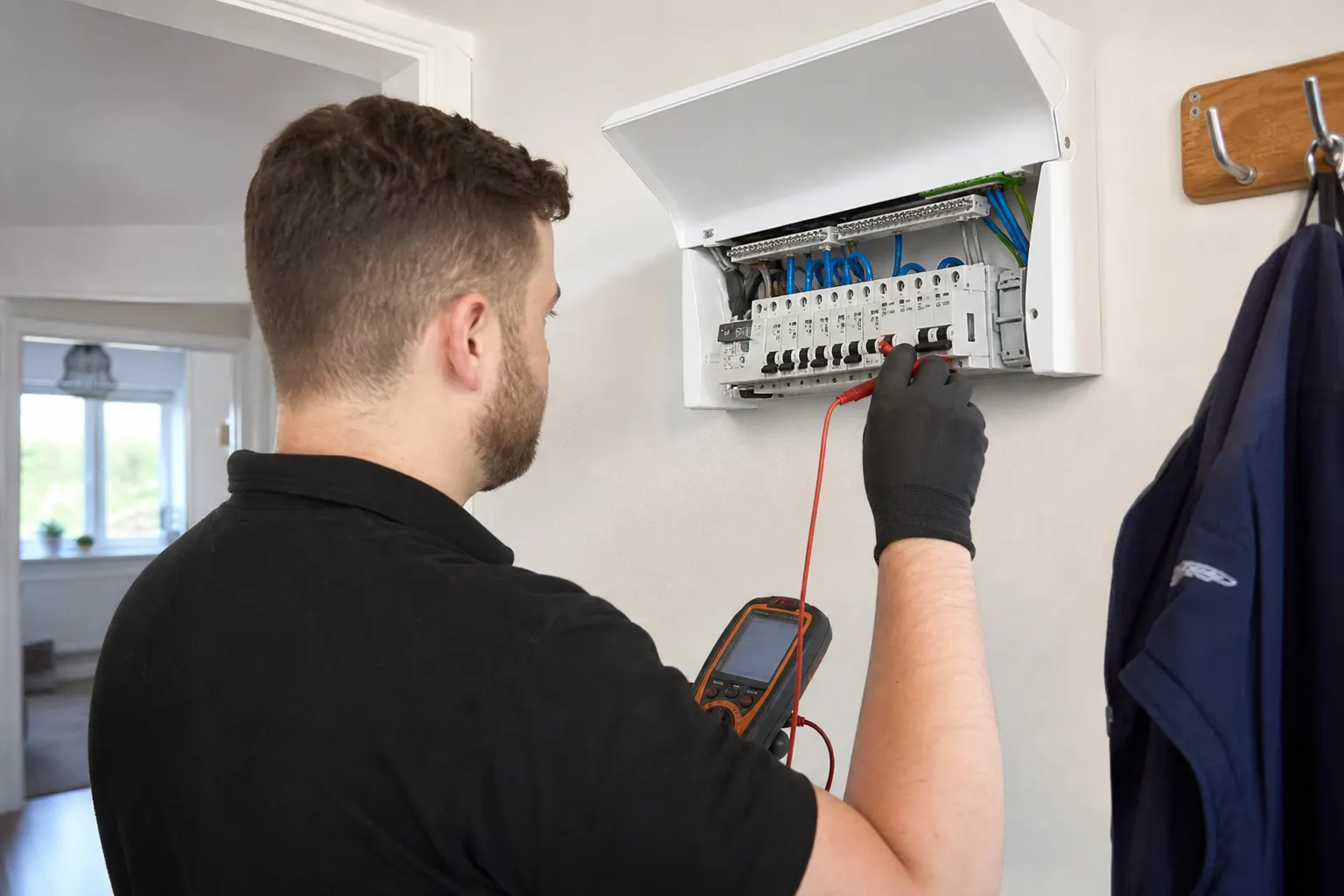
How EICR pricing usually works
An EICR (electrical installation condition report) is an inspection and testing job, so most electricians price it in one of a few ways. Some give a fixed price for the whole report, based on what they know about the property. Others charge by time, using an hourly rate or a day rate. Some add a callout or travel element on top.
A fixed price is easiest to compare, but only if you know what it covers. Ask whether the figure includes the written report, any extra visits, and the testing of every circuit, or only a sample. If someone quotes by the hour, ask roughly how many hours they expect and what happens if the job runs over.
What moves the cost up or down
The biggest factor is the size of the electrical installation. A small flat with a handful of circuits needs less testing than a large family house with several floors, an extension and outbuildings. More circuits means more time spent testing, recording results and writing up the condition report.
Property age and condition matter too. Older properties can have outdated wiring, mixed cable types, older consumer units or alterations that nobody documented, and these take longer to trace and assess. Larger or older homes often need more time than a modern, well-labelled installation.
Access also plays a part. Furniture in front of sockets, locked rooms, loft hatches that are hard to reach, or a consumer unit tucked behind stored items can all add time. Tenanted properties may need extra arrangements to get in. Time of day can affect pricing as well, as evening or weekend appointments may be priced differently from standard working hours.
What the inspection involves and how long it takes
An electrician inspects the fixed wiring, consumer unit, earthing and bonding, sockets, switches and lighting. They carry out tests on the circuits and record what they find. The report then grades any issues, and anything marked as potentially dangerous needs prompt attention.
The time needed varies. A compact home may take a few hours, while a larger or older property can take longer, sometimes spread over more than one visit. Parts of the supply will need to be switched off during testing, so plan for the power being off at times. Ask the electrician how long they expect to be on site, as it helps explain the quote.
Remedial work is a separate cost
The price of the report usually covers the inspection and the written results, not repairs. If the report finds faults or recommends improvements, any remedial work is normally quoted separately. That might be as small as replacing a damaged accessory or as large as replacing a consumer unit or rewiring a circuit.
It helps to ask upfront whether the electrician can carry out remedial electrical work if it is needed, and whether they will quote for it in writing before starting. You are free to get a second quote for repairs. Just keep the report, as it is the basis for the work.
Getting a quote you can compare
When you ask for quotes, give the same information to everyone: the type and approximate size of the property, the number of bedrooms, the number of consumer units, whether it is owner-occupied or rented, and whether there are outbuildings, a garage or an extension. Mention any known problems such as tripping circuits or flickering lights.
Then compare like with like. Check what is included, whether there are any extra charges, and how the electrician deals with remedial work. Be cautious about any offer that sounds unusually cheap or vague, because a thorough inspection takes time. Also check that the person doing the work is competent in inspection and testing, and ask what experience and qualifications they hold.
If the report is for a rental property, the rules for landlords on how often an inspection is needed can change, so check GOV.UK for the current position. For your own home, many people have an inspection at least every five years or when buying a property, as a general guide to electrical safety. EICR Benfleet serves Benfleet and the wider Essex area for EICR work.
Common questions
Can I sell my house without an electrical safety certificate?
In general, an EICR is not something every home seller must have, but buyers or their solicitors may ask for one. Having a recent report can help the sale go smoothly. Rules can change, so check GOV.UK for the current position.
Can a normal electrician do an EICR?
Not every electrician is experienced in inspection and testing. Ask whether they regularly carry out EICRs, what qualifications they hold for it, and ask to see proof before you book.
How long does an EICR test take?
It depends on the number of circuits, the size of the property and its age. A small home may take a few hours, while larger or older properties can take longer. Ask the electrician for an estimate when you request your quote.
Where can I get a free electrical safety check?
A full EICR is a detailed inspection and testing job, so it is normally a paid service. Some landlords, housing providers or local schemes may offer checks in certain circumstances, so ask them directly. Be wary of anything that promises a full report at no cost without explaining what is covered.
Useful sources
- NICEIC: The electrical contracting body, with a register to check an electrician.
- Citizens Advice: Free, independent advice on your rights when paying for work.