Guide
What is an EICR?
An EICR is a report on the condition of a property's fixed electrical wiring, produced after an inspection and test by a qualified electrician.
- Send a short enquiry
- Covering Essex
- EICR and related services
An EICR (Electrical Installation Condition Report) is a formal report on the safety and condition of the fixed electrical wiring in a property. A qualified electrician inspects and tests the installation, then records any damage, wear or faults against current standards. EICR Benfleet covers Benfleet and the wider Essex area for this kind of inspection.
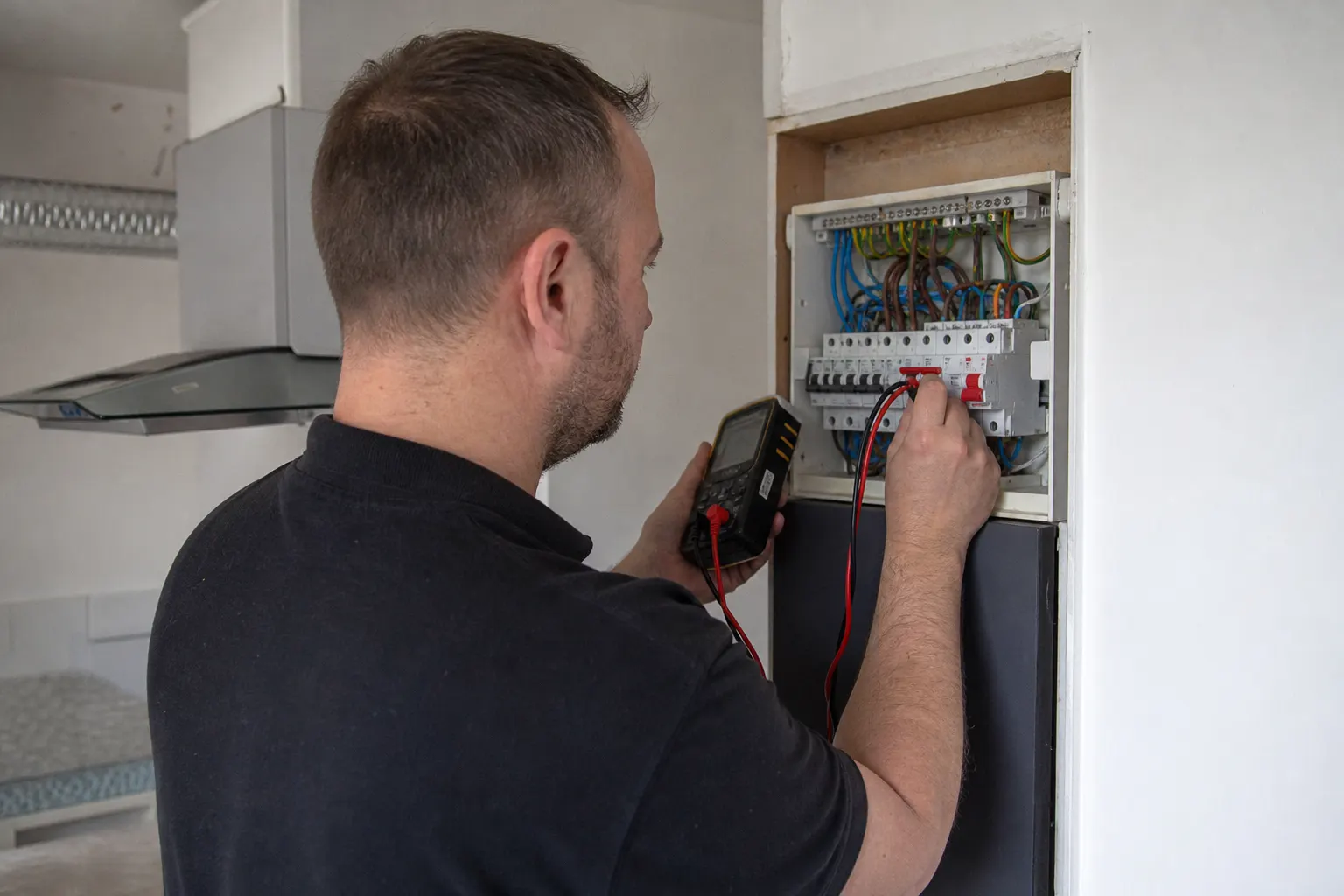
What an EICR actually covers
The report looks at the fixed parts of your electrical installation: the consumer unit (fuse box), circuit wiring, sockets, light fittings, switches and earthing and bonding. It is about the permanent system in the walls, not your portable appliances such as kettles or lamps.
The purpose is to find out whether the installation is safe to keep using. The electrician checks for overloaded circuits, damaged or deteriorating wiring, poor connections, missing protection and anything that could cause shock or fire. Results are compared with the wiring standards that apply, so older installations are judged on their present safety, not just on when they were put in.
What happens during the inspection and how long it takes
The electrician carries out a visual inspection first, then runs a series of tests on the circuits. Some of these need the power switched off for a while, so expect short interruptions. Tell the electrician about any equipment that must stay on, such as a freezer, a medical device or a home office setup.
How long an EICR test takes depends mainly on the size of the property and the number of circuits. A small flat is quicker than a large house, and access matters too. Cluttered cupboards, a consumer unit that is hard to reach or a loft full of stored items will slow things down. Your electrician can give you a realistic idea once they know the layout. Clear access to the fuse box and main rooms helps.
Understanding the results and observation codes
The report is marked either satisfactory or unsatisfactory. Findings are recorded with codes:
C1 means danger is present and immediate action is needed. C2 means potentially dangerous. C3 means improvement is recommended. FI means further investigation is required.
A C1, C2 or FI usually leads to an unsatisfactory result. C3 items on their own do not normally cause a fail, but they are worth reading carefully. If remedial work is needed, deal with it as soon as possible, and keep the report and any follow-up paperwork safe. The report also states when the next inspection should happen, based on the condition of the installation.
Who needs an EICR
Landlords are the group most often asked for one. Private rented homes in England generally need the electrical installation inspected by a qualified person at regular intervals, and tenants must be given a copy. Rules differ across the UK and can change, so check GOV.UK for the current position before you rely on this.
Homeowners are not usually required to have one, but it is sensible if you have bought an older property, have never seen an inspection report, or notice warning signs such as flickering lights, warm sockets, buzzing, scorch marks or a consumer unit with old rewirable fuses.
If you are selling, there is generally no single legal requirement to hold an EICR, though a buyer or their solicitor may ask for one. Having a recent report can make the sale smoother. Ask your solicitor or estate agent what applies to your sale.
How EICR pricing works
There is no single fixed rate for an EICR, and any price you see elsewhere may not match your property. The main factors are the number of circuits, the size of the property, the age and condition of the wiring, and how easy it is to reach the consumer unit and outlets. Extra time spent tracing circuits or dealing with poor labelling can add to the job.
Some electricians quote a fixed price for the inspection, others charge by the hour or add a callout fee. Parts and remedial work are normally separate, because nobody knows what is needed until the testing is done. Time of day and travel can also play a part.
Ask for a written quote that states what is included, whether the report is covered, and how any further work would be charged. When choosing an electrician, ask whether they are qualified to carry out periodic inspection and testing and can show proof.
Common questions
What is an EICR certificate?
People often say certificate, but the document is a report. It records the condition of the electrical installation, lists any faults with codes, and says whether the result is satisfactory or unsatisfactory.
How long does an EICR test take?
It varies with the size of the property, the number of circuits and how easy everything is to access. A small home generally takes less time than a large one. Ask your electrician for an estimate once they know the layout.
Can I sell my house without an electrical safety certificate?
There is generally no single legal rule that stops a sale without an EICR, but buyers may ask for one. Check with your solicitor and look at GOV.UK for the current rules.
How much does an EICR cost?
It depends on the property size, number of circuits, access and how the electrician charges. Ask for a written quote that says what is included and how any extra work would be priced.
Useful sources
- NICEIC: The electrical contracting body, with a register to check an electrician.
- GOV.UK: electrical safety standards in the private rented sector: The official guidance for landlords, tenants and councils on electrical safety checks.