Guide
How to get an EICR
To get an EICR, book a qualified electrician to inspect and test your electrics and issue the report. Here is how the process works and what to prepare.
- Send a short enquiry
- Covering Essex
- EICR and related services
To get an EICR, book a qualified electrician to carry out inspection and testing of your fixed electrical installation and issue an electrical installation condition report. You arrange access to the property and the consumer unit, the electrician does the checks, and you receive a written report saying whether the installation is satisfactory. EICR Benfleet provides EICRs and serves Benfleet and the wider Essex area.
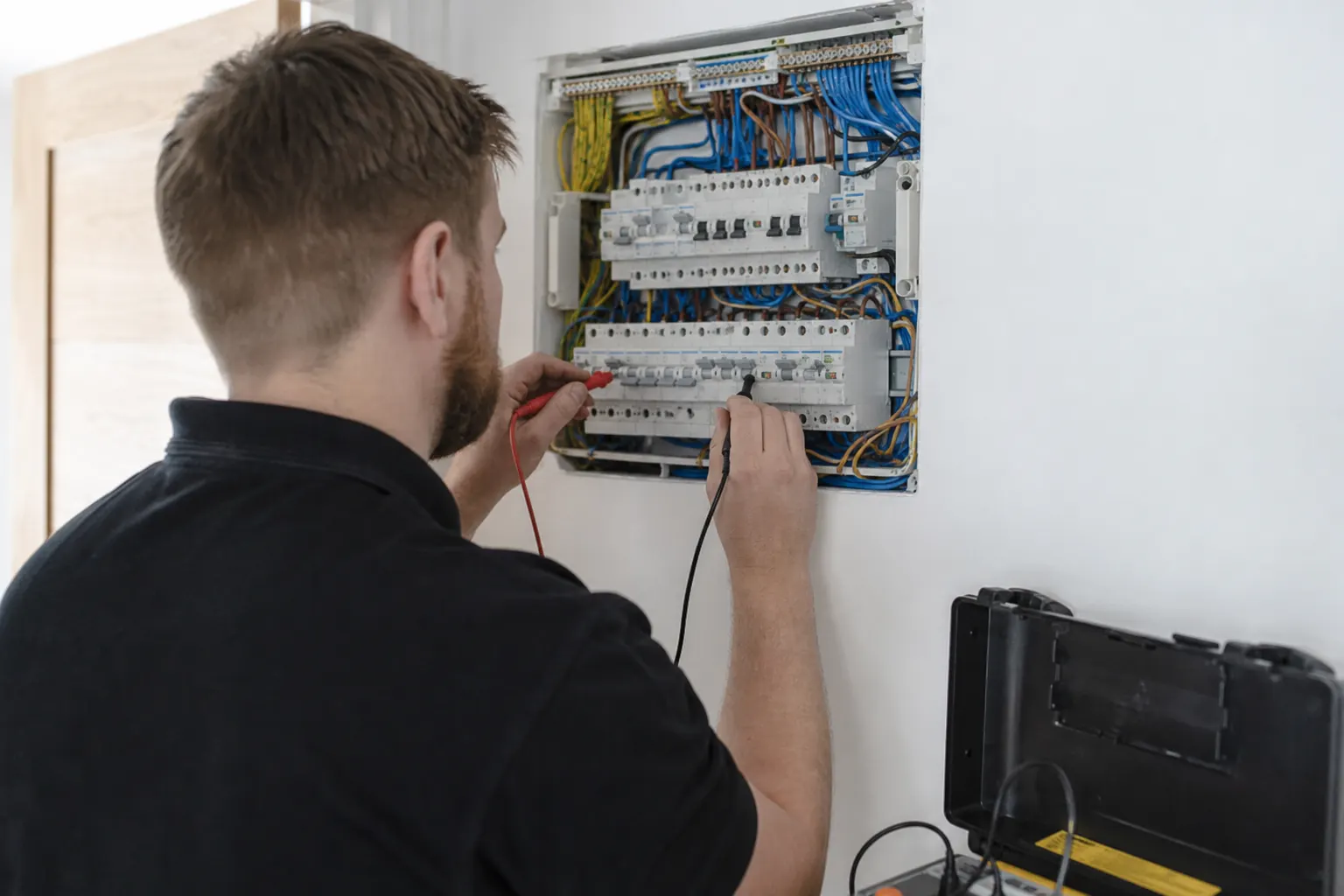
What an EICR is and who needs one
An EICR is an Electrical Installation Condition Report. It records the condition of the fixed electrical installation in a property: the consumer unit, wiring, sockets, switches, lights and earthing and bonding. It is not a test of your appliances.
Homeowners often get one when buying or selling, after buying an older property, or simply to check that the electrics are safe. Landlords tend to need one most. In England, private landlords must generally have the electrical installation inspected and tested at regular intervals, commonly at least every five years, and keep the report. Rules can change, so check GOV.UK for the current position, especially if you let property in another part of the UK.
The steps to getting one
First, decide who the report is for: your own home, a rental property or a sale. Tell the electrician this when you enquire, as it can affect what they need to know.
Second, give the basics: the type of property, roughly how many bedrooms or circuits it has, whether it is occupied, and the date of any previous report. If you have an old condition report, keep it handy.
Third, agree a date and make sure the electrician can reach the consumer unit, all rooms and any outbuildings, garages or sheds with a supply. Tenants need notice, and the power will be switched off for periods during testing.
Finally, after the inspection you receive the report. If it lists faults, you arrange remedial work.
Can you book one online, or do it yourself?
You can often start the process online or by phone, by sending an enquiry and arranging a visit. But an EICR cannot be done remotely. Someone has to be physically in the property, opening the consumer unit and testing circuits.
Doing your own is not sensible unless you are properly competent. Inspection and testing needs the right instruments, training and experience to interpret results, and a landlord relying on a report from an unqualified person could struggle to show they met their duties. For a rented property, use a qualified electrician.
Choosing the right electrician
Not every electrician is suited to periodic inspection work, so ask directly. Good questions are: do you regularly carry out EICRs, are you registered with a recognised competent person scheme, and do you hold suitable insurance? You can also ask to see ID when they arrive.
Ask what the report will cover, whether it includes every circuit or a sample, and how remedial work is handled if problems are found. Some electricians quote separately for repairs, which is reasonable, but you should know the process before you book.
What the result means
The report gives an overall outcome of satisfactory or unsatisfactory. Any observations are given codes. C1 means danger is present and needs immediate action. C2 means potentially dangerous. C3 means improvement is recommended. FI means further investigation is needed.
A C1, C2 or FI usually leads to an unsatisfactory result, so remedial work is needed before the installation can be considered safe. C3 items do not normally cause a fail on their own. Landlords should keep the report, give copies to tenants and, where required, to the local authority, and keep proof that remedial work was done. A landlord who ignores the requirements may face enforcement action from the council, so check the current rules on GOV.UK.
How pricing works
EICR pricing is set by the electrician, so the sensible approach is to ask for a written quote. Things that move the cost include the size of the property, the number of circuits and consumer units, how much of the installation is easy to reach, and the age and condition of the wiring. Outbuildings and extra supplies add time.
Some electricians charge a fixed price for the report, others use a callout fee plus an hourly rate. Ask what is included, whether travel or parking is extra, and whether any repairs are priced separately. Evening or weekend visits may be charged differently. Poor access, locked rooms or missing records can lengthen the job, so clear the way beforehand.
Common questions
Can any electrician do an EICR?
No. The electrician should be competent in inspection and testing, not only installation work. Ask whether they regularly carry out EICRs, which competent person scheme they belong to and whether they are insured.
Can a landlord be fined for no EICR?
Local authorities can take enforcement action against landlords who do not meet the electrical safety rules. The details vary by nation and can change, so check GOV.UK for the current position.
How long does an EICR last?
That depends on the property and the inspector's recommendation. The report states when the next inspection is due. For rented homes, an interval of up to five years is common, but the electrician may advise sooner.
What is an EICR check?
It is a visual inspection plus testing of the fixed electrical installation, carried out by an electrician, resulting in a condition report that says whether the installation is safe to continue in use.
Useful sources
- NICEIC: The electrical contracting body, with a register to check an electrician.
- GOV.UK: electrical safety standards in the private rented sector: The official guidance for landlords, tenants and councils on electrical safety checks.