Guide
When should you get an EICR?
Get an EICR before selling, when buying, before letting a property, and whenever the last report has run out. Here is how to time it.
- Send a short enquiry
- Covering Essex
- EICR and related services
You should get an EICR when you are buying or selling a property and there is no recent report, when you let a property to tenants, and whenever the date recommended on your last report has passed. For a sale or purchase, the best time is before the property is listed or before contracts are exchanged, while there is still room to deal with anything the report finds.
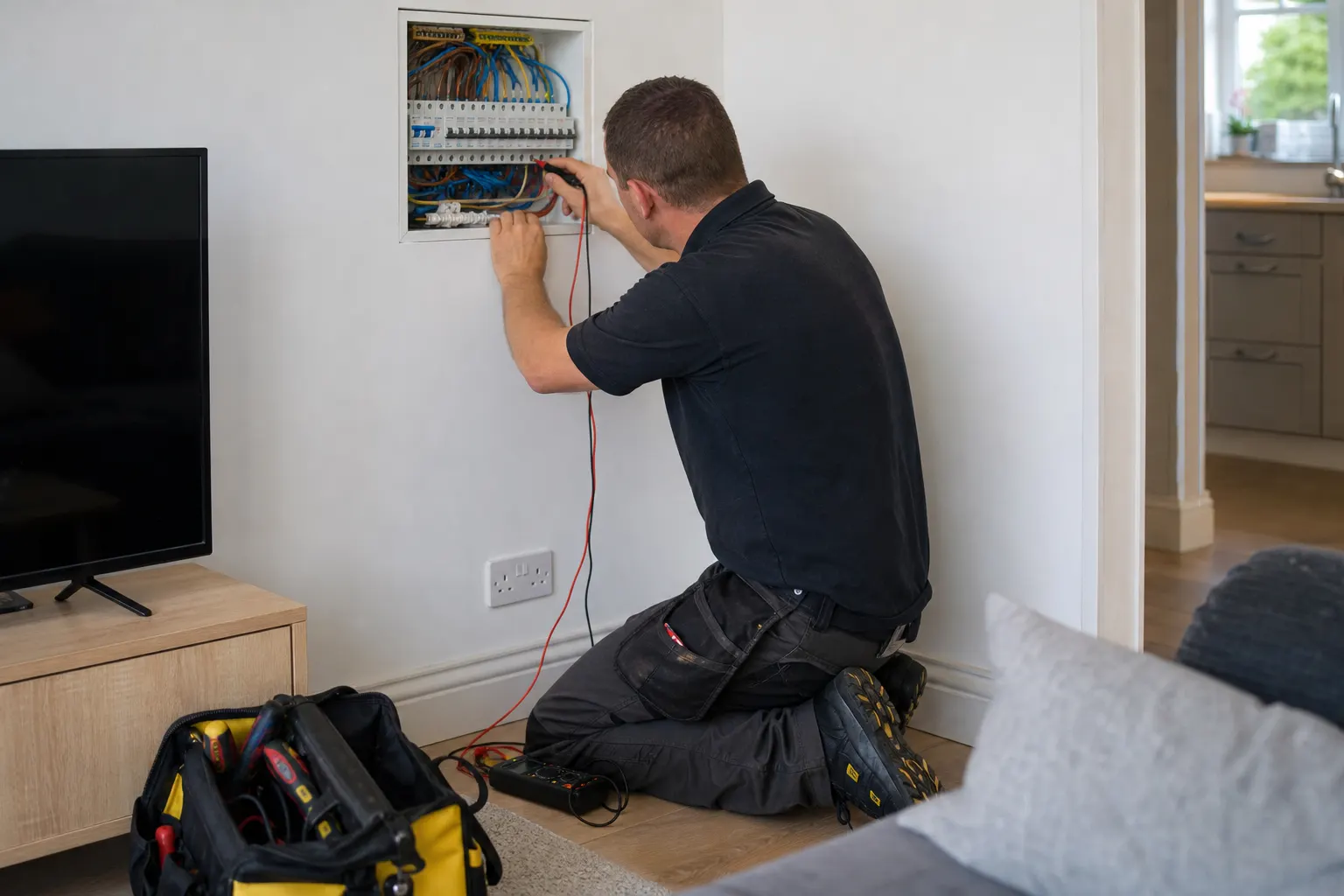
What an EICR is and what it involves
EICR stands for Electrical Installation Condition Report. It is a record of the condition of the fixed electrical installation in a property: the consumer unit, wiring, circuits, sockets, switches and light fittings. It does not cover portable appliances such as kettles or lamps.
A qualified electrician carries out inspection and testing, checking for damage, wear, overloaded circuits, poor earthing and bonding, and anything that does not meet the standards the installation should be judged against. Parts of the property may need to be accessed and the power switched off for a time, so it helps to plan the visit around your household.
The report gives an overall result of satisfactory or unsatisfactory. Any problems are listed with codes: C1 means danger is present, C2 means potentially dangerous, C3 means improvement is recommended, and FI means further investigation is needed. A C1, C2 or FI usually means the report is unsatisfactory.
When you are selling
There is no general rule that a home must have an EICR before it is sold, but getting one first is often sensible. A buyer's surveyor or solicitor may ask about the electrics, and a report in your hand answers that question early.
If the report finds faults, you can have the work done, or decide how to handle it in the price and the sale. Finding out after an offer has been accepted tends to cause delays and awkward renegotiation. Ask your estate agent or solicitor what buyers in your situation usually expect.
When you are buying
If the seller has no report, or the one they have is old, consider arranging an EICR before you exchange contracts. A standard survey is not an electrical test, so it will not tell you the real condition of the wiring and consumer unit.
Tell the electrician you are buying so they can give you a clear picture of what needs attention. Older properties, those with an old fuse board, and homes with signs of DIY alterations are good reasons not to leave it until after you move in. If you cannot test before exchange, book it as soon as you get the keys and before any redecorating hides the cables.
If the property is rented out
Landlords in the private rented sector in England must have the electrical installation inspected and tested at regular intervals, and must give tenants a copy of the report. The report states when the next inspection is due, and for rented homes that interval is commonly five years at most, sometimes shorter if the installation's condition calls for it.
Buying a property to let, or selling a tenanted one, makes a current report especially useful. The electrical safety standards and the detail of the regulations can change, so check GOV.UK for the current position rather than relying on an older article.
Other times to get one
Outside of a sale, there are several good moments for an EICR:
When the last report is out of date or its recommended retest date has passed. For an owner-occupied home with no known problems, the interval is often longer than for rented property, and the report will advise.
Before or after major work, such as a rewire, an extension, or replacing the consumer unit, where you want to confirm the condition of the wider installation.
When you notice warning signs: tripping circuits, flickering lights, warm or scorched sockets, a buzzing sound, or a fuse board that looks old.
When you move into a property and have no paperwork on the electrics at all.
How the cost is worked out
Pricing for an EICR depends on how the electrician charges: a fixed price for the inspection, an hourly rate, or a callout fee plus time. What moves the cost most is the size of the property, the number of circuits and consumer units, how easy it is to reach the installation, and how long the testing will take. Any follow-up repairs are separate and depend on the parts and labour needed. Ask for a written quote that says what is included, and whether remedial work would be quoted separately.
Common questions
What does EICR stand for?
It stands for Electrical Installation Condition Report. It records the condition of a property's fixed wiring and associated equipment and lists any faults or recommended improvements.
How long is an EICR valid for?
The report states a recommended date for the next inspection. For rented property this is commonly no more than five years, and sooner if the electrician advises it. A report may stop being useful earlier if major electrical work is done afterwards.
How long does an electrical test take?
It depends on the size of the property, the number of circuits and how easy they are to reach. A larger home takes longer than a small flat. Ask the electrician for an estimate when you request the quote.
Where can I get a free electrical safety check?
Be careful with offers described as free, as they may not be a full inspection and test. Ask exactly what is covered and whether you receive a written report. Some landlords, housing providers or schemes may help certain households, so check GOV.UK or your local council.
Useful sources
- NICEIC: The electrical contracting body, with a register to check an electrician.
- GOV.UK: electrical safety standards in the private rented sector: The official guidance for landlords, tenants and councils on electrical safety checks.